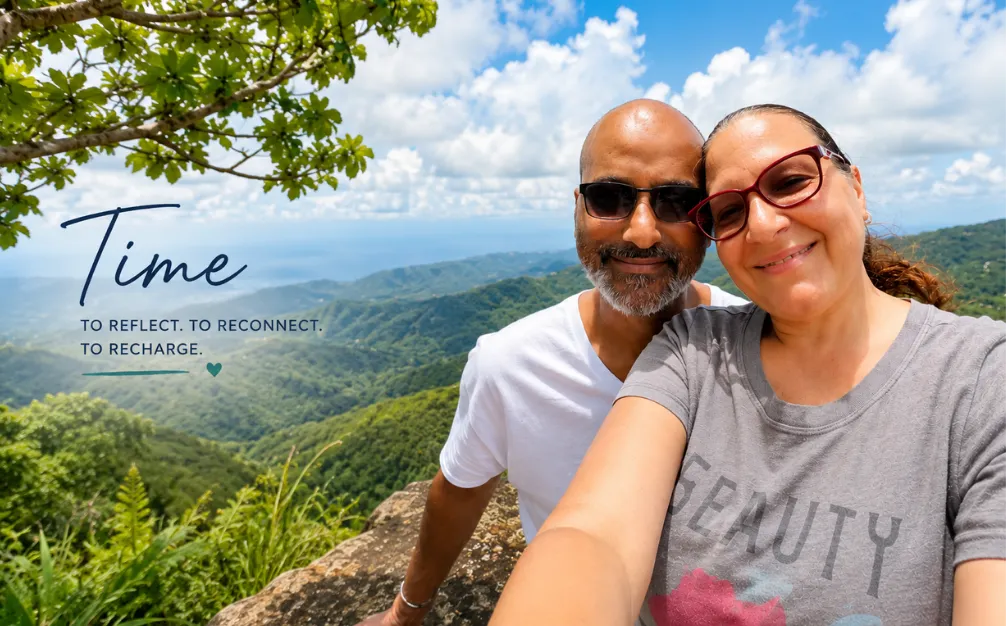
A few weeks ago, my husband and I spent ten days in the mountains of Puerto Rico. We unplugged from work, left behind our daily routines, and immersed ourselves in nature and a slower pace of life.
Something unexpected happened.
Within a few days, I noticed a remarkable change in him. He had more energy. He was sleeping better. He was eating regularly. His sense of humor returned. He was engaged in conversations, eager to explore, and fully present. It felt like I was spending time with the man I had known years ago.
As we flew home, I couldn’t stop thinking about what had changed.
It wasn’t a new medication. It wasn’t a complicated treatment plan.
It was the environment.
The constant demands, stress, interruptions, and responsibilities had been replaced, if only temporarily, with rest, fresh air, meaningful connection, and space to breathe.
That experience stayed with me long after the vacation ended because I realized how often we mistake chronic stress for normal.
When Survival Becomes the Standard
As the founder of a consulting firm serving nonprofit organizations, I work every day with Executive Directors who are deeply committed to their missions.
They carry enormous responsibility.
They’re responsible for fundraising, managing staff, reporting to boards, overseeing programs, solving crises, and somehow finding time to think strategically about the future.
Many have become so accustomed to operating under constant pressure that they no longer question it. They simply assume this is what leadership looks like.
But what if it isn’t?
What if constantly feeling behind isn’t a sign that you’re doing important work?
What if it’s a sign that your organization needs more capacity?
Capacity Is More Than Hiring Another Person
When people hear the word “capacity,” they often think about adding staff.
Sometimes that’s the answer.
More often, capacity comes from building systems, strengthening processes, and surrounding yourself with trusted partners who can shoulder part of the load.
Sustainable organizations aren’t built on heroic effort.
They’re built on intentional infrastructure.
The strongest nonprofit leaders I know understand that they cannot, and should not, do everything themselves. They invest in relationships, processes, and expertise that allow them to focus on what only they can do: leading the organization.
The Hidden Cost of Doing It All
When organizations operate in perpetual crisis mode, fundraising often becomes reactive.
Grant deadlines sneak up.
Opportunities are missed because there isn’t enough time to conduct thoughtful prospect research.
Compelling proposals become rushed.
Long-term planning gives way to short-term survival.
Ironically, the very work that could create greater financial stability is often the first thing sacrificed because there simply aren’t enough hours in the day.
Creating the Conditions for Success
Watching my husband thrive in a different environment reminded me that people perform best when they’re supported, not when they’re stretched beyond their limits.
The same is true for organizations.
When nonprofit leaders have the right support systems in place, they make better decisions. They build stronger relationships with funders. They think more strategically. They create healthier organizations for their teams and, ultimately, better outcomes for the communities they serve.
At Lydia Sierra Consulting, we’ve never believed our role was simply to write grants.
Our role is to become a trusted extension of your team—providing the strategic prospect research, proposal development, budgeting support, and grants management expertise that creates capacity where it’s needed most.
Because sustainable fundraising isn’t about working harder.
It’s about building an organization that doesn’t have to rely on heroic effort to achieve extraordinary impact.
Sometimes the greatest investment you can make isn’t another hour of work.
It’s creating the conditions that allow your organization—and your people—to thrive.
Is your organization spending more time reacting than planning? We’d love to help you build a sustainable fundraising strategy that creates capacity for your team and positions your organization for long-term growth. Let’s start a conversation.