I’ve noticed a pattern over the last decade that I don’t think we talk about enough.
Many nonprofit organizations are incredibly successful in their early years because of the passion and determination of their founders. They secure funding through relationships, persistence, and an unwavering commitment to their mission. Their programs grow. Their impact grows. Their reputation grows.
But eventually, something changes.
The funding that helped build the organization is no longer enough to sustain it.
The founder, who once wore every hat, is now managing staff, programs, finances, partnerships, and a growing list of funders. The organization has become more sophisticated, but the systems supporting fundraising haven’t kept pace.
That’s usually when someone says, “We need a grant writer.”
In my experience, that’s rarely the real need.
What organizations often need is stronger institutional fundraising capacity.
There’s a significant difference.
Writing a proposal is only one stage of a much broader process. Long before a single word is drafted, organizations must decide which opportunities truly align with their mission, whether they have the capacity to deliver on what they’re proposing, how a project should be designed, how departments will work together, how budgets support long-term sustainability, and whether pursuing the opportunity is even the best use of their time.
Those are strategic decisions, not writing exercises.
Over the years, I’ve watched organizations spend countless hours chasing grants that were never a good fit, while overlooking opportunities that could have strengthened both their mission and their financial sustainability. I’ve also seen the opposite: organizations that intentionally built the systems, workflows, internal collaboration, and decision-making processes needed to pursue funding strategically. Their fundraising became more focused, more competitive, and ultimately more sustainable.
That’s why our work at Lydia Sierra Consulting has evolved.
People often assume we’re a grant-writing firm because proposals are one of the most visible parts of what we do. In reality, proposal development is only one piece of our work.
Our role is to help organizations strengthen institutional fundraising by identifying the right opportunities, assessing mission alignment and organizational readiness, facilitating collaboration across leadership, programs, finance, and operations, shaping fundable initiatives, translating complex work into compelling funding requests, and building the systems and reusable assets that support fundraising long after a proposal has been submitted.
When organizations build this kind of capacity, they stop reacting to funding opportunities and start making intentional decisions about which investments will best advance their mission.
Ironically, this challenge isn’t unique to nonprofits.
As I’ve grown my own business, I’ve realized I’ve faced many of the same decisions our clients face. It’s tempting to focus on the next client, the next contract, or the next milestone. But sustainable growth requires investing in systems before they feel affordable. It requires documenting processes, strengthening operations, developing leaders, and creating the infrastructure that allows an organization to scale without relying on one person to hold everything together.
For a small business, those investments often come before the revenue fully catches up.
For nonprofits, the challenge can feel even greater because unrestricted funding is limited and every dollar is already committed somewhere else.
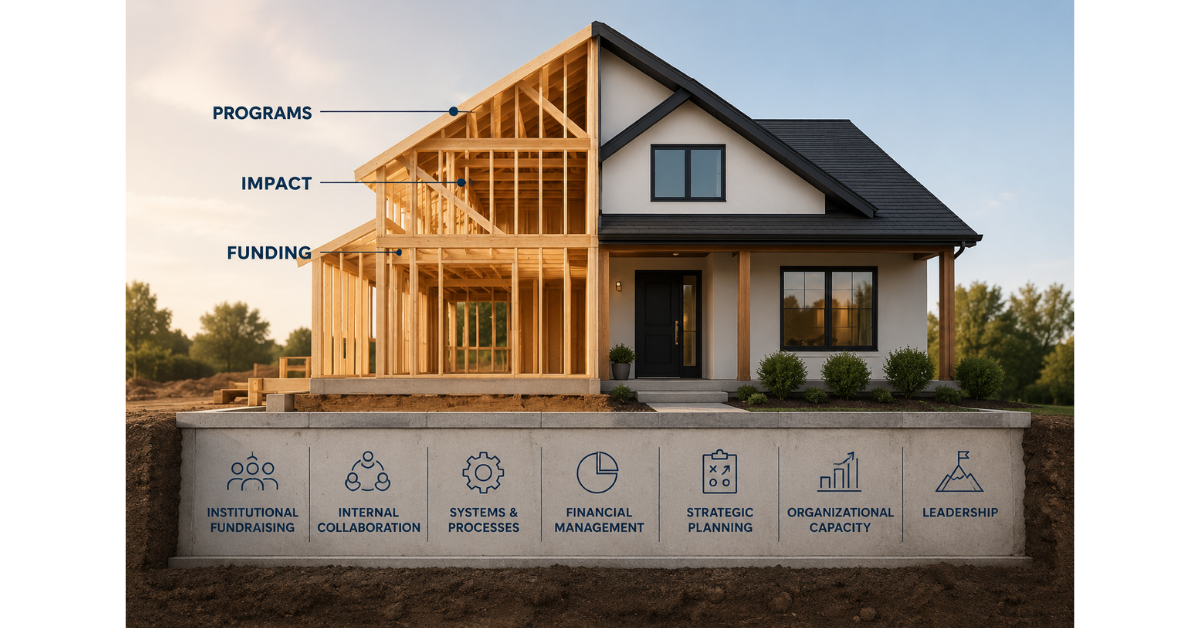
That’s why I believe fund development and organizational capacity are inseparable. The strongest fundraising programs aren’t built by writing more proposals. They’re built by strengthening the organization behind them.
When we invest in organizational capacity, we’re not just increasing the likelihood of securing the next grant.
We’re building organizations that can pursue transformational opportunities, adapt through leadership transitions, preserve institutional knowledge, and create lasting impact for the communities they serve.
That’s a much stronger return on investment than any single grant could ever provide.